
As GLP-1 medications like Wegovy, Ozempic, and Zepbound (technically a GLP-1 and GIP medication) continue to gain popularity, so does the amount of misinformation surrounding them.
Depending on where you’ve been scrolling online, you might be seeing things like “taking a GLP-1 is taking the easy way out,” or “cheating,” or that it simply replaces the need for healthy habits altogether.
But none of that is true, and for many people, these medications can be a powerful tool supporting the lifestyle changes required for sustainable weight loss and improved metabolic health.
If you are considering taking (or are currently taking) a GLP-1 medication, in this post I will be breaking down everything I want you to know about these medications as your trusted registered dietitian and fitness trainer.
GLP-1 Medications Are a Tool, Not a Standalone Solution
GLP-1 medications are not meant to work as a standalone. Instead, they should be prescribed in addition to changes in nutrition, physical activity, sleep, stress management, and other lifestyle factors that influence long-term health and weight.
Research consistently shows that the most successful outcomes occur when GLP-1 medications are combined with structured lifestyle support and medical supervision. This is why many providers who prescribe these medications recommend working with a healthcare team that includes both a physician and a registered dietitian.
GLP-1 medications may help to create the physiological environment for weight loss, but your daily habits still play a major role in the results you want to see and more importantly, how sustainable they will be long term.
How GLP-1 Medications Actually Work
Let’s break it down!
GLP-1 medications mimic a hormone called glucagon-like peptide-1 (hence the name GLP-1), which your body naturally releases after eating.
These medications support weight loss and blood sugar regulation through several mechanisms:
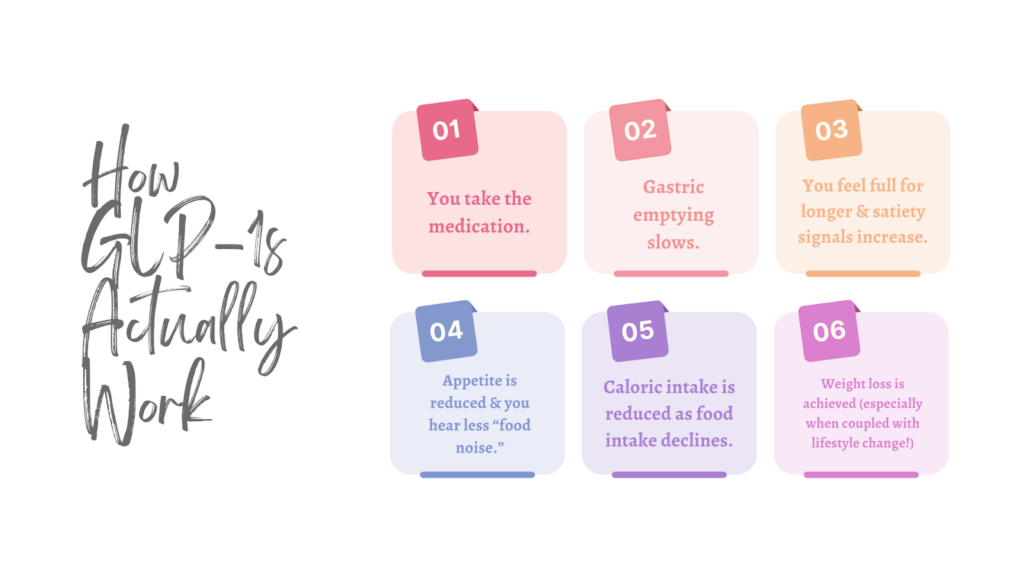
(References 1, 2)
Because these medications act on both the digestive system and the brain, many individuals report that eating for weight loss suddenly feels more manageable than it ever has before – largely due to the mechanisms outlined above.
For someone who has spent years battling constant hunger, cravings, or food noise, this shift can be life-changing.
Weight Loss Isn’t Just About Willpower
One of the biggest myths about weight loss is that success is purely about discipline.
In reality, weight regulation is much more complex.
Genetics, hormones, stress, sleep, metabolism, medications, environment, exercise, and mental health all influence an individual’s ability to lose weight. For some, their physiology actively resists weight loss despite consistent efforts.
This is where medications like GLP-1s can help level the playing field. They’re not a “magic fix,” but they can support the biological side of weight regulation, making lifestyle changes more achievable.
The Conversation Around “Misuse”
You may have also heard conversations about people using GLP-1 medications for aesthetic purposes rather than medical ones. While this does happen, it shouldn’t overshadow or discount the reality that millions of individuals with obesity or diabetes benefit significantly from these medications.
Obesity is a chronic medical condition, not a moral failing, and using evidence-based treatment for a chronic condition is not cheating.
Nutrition Still Matters – Nutrition Tips for GLP-1 Medications
While GLP-1 medications can reduce appetite, what you eat still matters, especially if your goal is sustainable weight loss and long-term health. Because these medications can make it easier to eat less overall, being intentional with nutrition becomes even more important.
See below for some important nutrition tips to focus on when considering a GLP-1 medication.
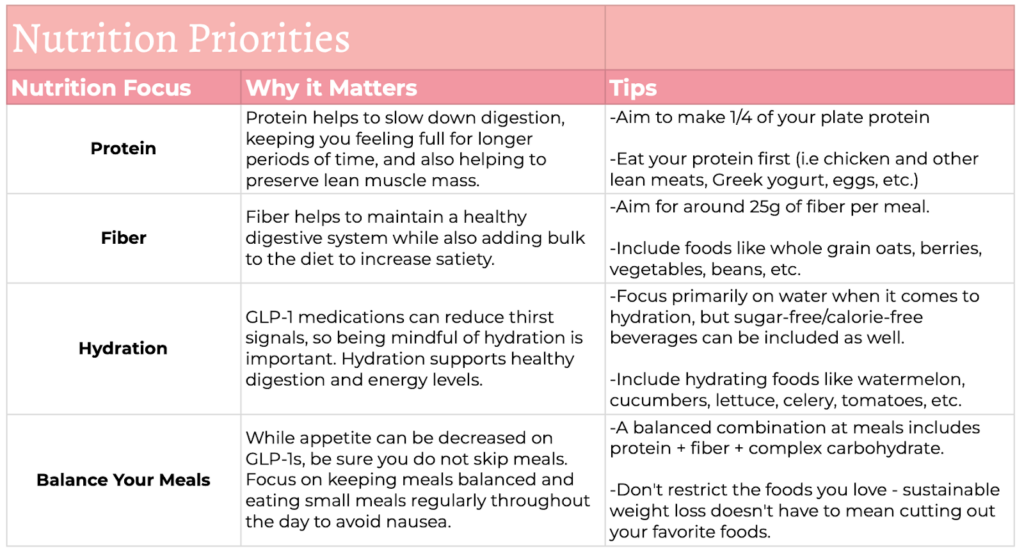
Protein and fiber are especially important because they help maintain muscle and satiety during weight loss.
(Reference 3)
You Don’t Have to Figure This Out Alone
If you’re currently on a GLP-1 medication or you are considering one, you deserve support that goes beyond “eat less and move more.”
Working with a registered dietitian who knows you and your specific needs can help you:
• Maintain muscle while effectively losing weight
• Navigate appetite changes and digestive side effects
• Build sustainable eating habits
• Keep your favorite cultural foods on your plate
• Create a plan that works with the medication (and your body,) not against it
The goal isn’t just to lose weight, but to create habits that allow you to feel better, eat foods you love, and maintain your results in the long-term.
If you’re ready to stop guessing and start feeling confident in how you’re eating while on a GLP-1, this is exactly what I help clients do every day.
Apply for a free discovery call here!
On this call, we’ll map out what’s currently not working, how I can help you see the results you want and maintain, and whether working together is the right next step for you.
References:
- Drucker, Daniel J. “Mechanisms of Action and Therapeutic Application of Glucagon-like Peptide-1.” Cell metabolism vol. 27,4 (2018): 740-756. doi:10.1016/j.cmet.2018.03.001
- Hayashi, Daisuke et al. “What Is Food Noise? A Conceptual Model of Food Cue Reactivity.” Nutrients vol. 15,22 4809. 17 Nov. 2023, doi:10.3390/nu15224809
- Weight Management, a Dietetic Practice Group of the Academy of Nutrition and Dietetics. “Maintaining Weight Loss Post Obesity Management Medication.” Dec. 2024.